We’ve seen machines become smarter, systems get faster, and factories run on data. But it was Industry 4.0 that brought automation, data, networked systems, and robotics into everyday production. Now the attention turns to a new direction that puts human value and purpose at the core of progress. This new direction is called Industry 5.0.
The fifth industrial revolution moves the focus from sheer efficiency to human-centric innovation. It puts humans at the heart of production, which is aided by artificial intelligence and collaborative robots.
But what is Industry 5.0? And how can you prepare your business for the 5th industrial revolution? We will break it down for you in this blog.
What Is Industry 5.0?
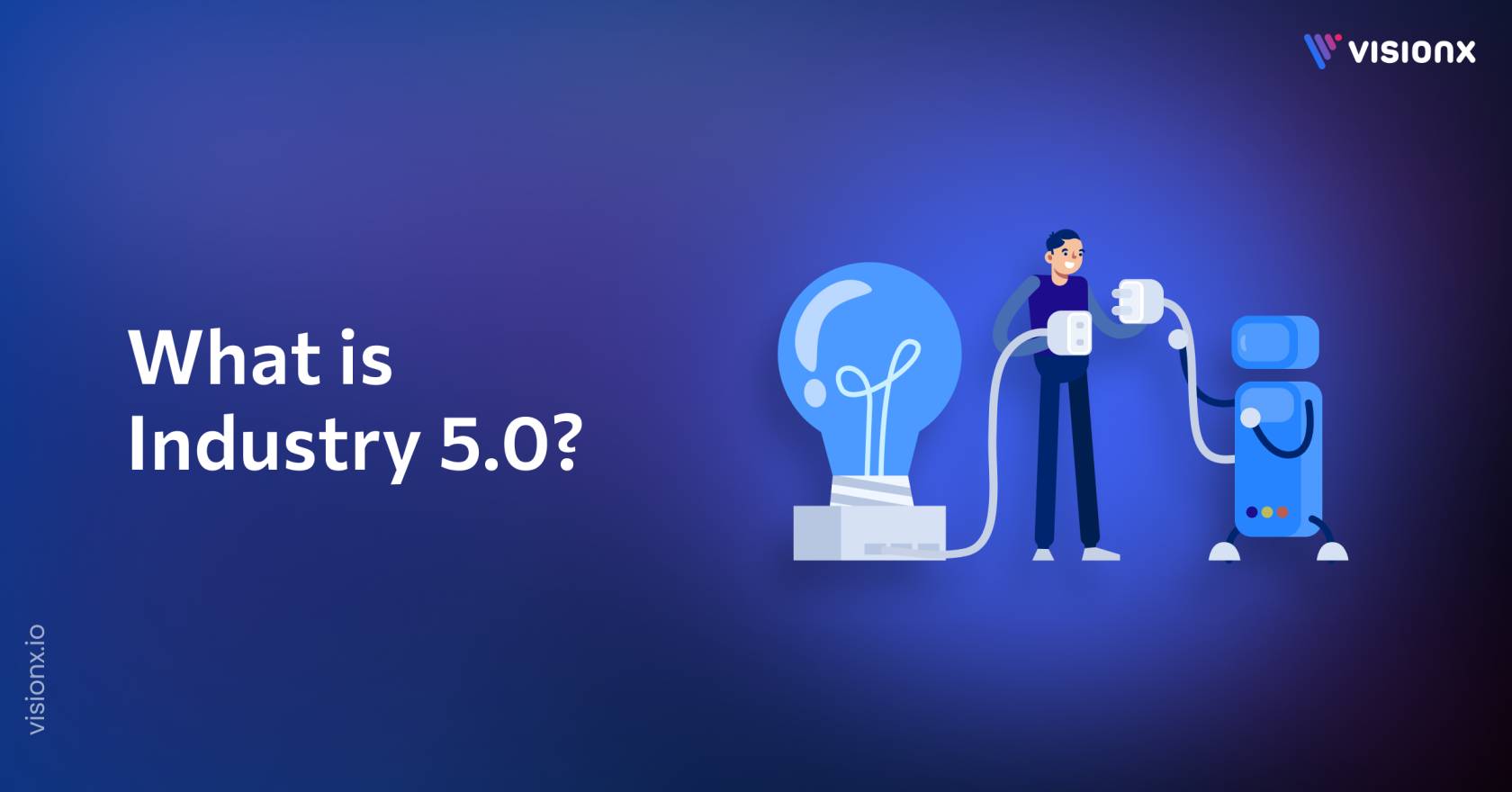
Industry 5.0 is the next phase after Industry 4.0 in the path of industrial evolution. It brings together human skill and advanced technologies like AI and different types of robots to improve the manufacturing industry without losing sight of purpose.
While Industry 4.0 brought automation and data-driven systems, largely driven by innovations in connected technologies like IoT in manufacturing industry, Industry 5.0 brings the human element and focuses on sustainability and resilience.
In short, it fosters an environment where humans and machines can collaborate. Machines perform repetitive tasks, while humans focus on creativity, problem-solving, and making informed decisions.
According to the European Commission, Industry 5.0 aims to deliver “growth while respecting the production limits of the planet.” It’s not just about more output. It’s about jobs and growth that also honor human values.
Industry 1.0 to 5.0: Evolution of Industrial Revolution
To understand Industry 5.0, it is helpful to look at the journey from the start. Each phase from industry 1.0 to 5.0 built the world we know today:
- Industry 1.0: The age of steam. People used water and steam to drive machines. This changed farms and factories forever.
- Industry 2.0: The rise of electricity and mass production. Workers and machines came together on factory floors in new ways.
- Industry 3.0: The entry of electronics. Computers began to assist with tasks and brought the first wave of automation.
- Industry 4.0: The shift to digital tools. AI, sensors, and data systems made smart factories a reality.
- Industry 5.0: A focus on human needs. Now, machines support your work, help shape better results, and align with green goals. This phase of the Industrial Revolution focuses on a more human-centric approach by bringing sustainability and resilience in the manufacturing processes.
Why Industry 5.0 Matters
Industry 5.0 is significant because it helps people regain focus. The fifth industrial revolution emphasizes human-centric goals, purpose, and ethics, whereas Industry 4.0 focused on smart tools, speed, and production. It is in favor of a future in which machines and humans collaborate with each other to create genuine advancement.
It builds systems that stay strong in times of change and supports ways to protect the planet through better use of resources. As the world advances, this phase creates space for both human insight and advanced tools to work in tandem.
Core Strategies of Industry 5.0
Industry 5.0 offers a new path, one that prioritizes people and brings genuine purpose to the factory floor. It moves past speed alone and builds on three clear strategies to help you shape a better future.
1. Human-Centric Strategy:
Start with your people. This strategy puts human skill, purpose, and insight at the centre. Use artificial intelligence and robotics to support your team and not replace them. Let humans lead with ideas and let machines handle the heavy tasks.
2. Resilience Strategy:
Stay ready for change. This strategy helps you build strong systems and supply chains that hold firm when things go wrong. It gives you more control and helps your business stay on track.
3. Sustainability Strategy:
Grow without harm. This strategy pushes you to use fewer resources, cut waste, and protect the planet. Make choices that help your business and the world at the same time.
Key Technologies Enabling the Human-Machine Future
In order to gain the full potential of the 5th industrial revolution, you need the tools and technologies. Some of these are listed here to help you move in the direction of a human-centric future.
- Artificial Intelligence (AI): AI helps machines make fast decisions with data. It frees your team to focus on goals that need human insight.
- Collaborative Robots: These robots work alongside people. They take on dull or heavy tasks while humans focus on ideas and real decisions.
- Big Data Analytics: With the right data, you spot patterns, avoid risks, and take action with clarity and speed.
- Smart Sensors: These tools give real-time updates from systems and machines. You stay alert and in control.
- Edge Devices: These devices process data where it starts, cutting delays and helping you act fast.
- Digital Twins: A digital twin shows a live model of your product or process. You can test, track, and fix without touching the real setup.
Real-World Examples of Industry 5.0
Here are two real examples that show how companies have already started to apply Industry 5.0 strategies by blending human skill with smart technology.
At BMW, factories now use collaborative robots to support workers with tasks that need precision or extra force. Instead of replacing people, the robots take on repetitive tasks, while humans focus on quality, safety, and smart decisions. It’s a clear example of human-machine collaboration that boosts both output and job satisfaction.
Adidas is another strong example. With its Speedfactory project, the brand showed how to mix smart tools with human creativity. Workers and machines teamed up to design and produce custom shoes at a faster pace and closer to the customer. This approach made space for mass personalization, better customer experience, and stronger control over the production process.
According to MarketsandMarkets, the global Industry 5.0 market is expected to reach USD 255.7 billion in 2029 at a CAGR of 31.2%
Industry 5.0 vs Industry 4.0: Key Differences
Industry 4.0 brought smart automation, sensors, and AI into factories. But Industry 5.0 puts people back at the center, focusing on purpose, personalization, and smart collaboration with machines. Though it builds on Industry 4.0 innovations like AI and IoT, it prioritizes understanding their impact on both workers and the environment. Let’s look at how the two approaches compare:
| Aspect | Industry 4.0 | Industry 5.0 |
| Main Focus | Uses smart machines to boost efficiency and output | Combines human talent with advanced tools to drive value |
| Human Role | People supervise or maintain automated systems | People lead and guide machines with skill and insight |
| Technology Purpose | Aims to cut errors and save time through automation | Helps people make better choices and solve real problems |
| Production Style | Large-scale production with little variety | Custom production based on user needs and personal touch |
| Sustainability | Often treated as an add-on or a future goal | Stays at the centre of every decision from start to finish |
| Resilience | May break under sudden changes or global shifts | Stays strong by adapting and placing trust in local systems and human input |
Benefits and Opportunities of Industry 5.0
Industry 5.0 takes a human-centric approach where people and machines work together. It creates new paths where you keep control, shape better results, and move with a purpose. Here are five key benefits that show why this shift matters:
1. Human Focus in Smart Manufacturing
Industry 5.0 puts your skills and judgment first. It gives you space to guide automation with empathy, creativity, and purpose. This leads to smart manufacturing where machines support people.
2. Real-Time Custom Output
You can shape each product to match the exact user’s needs. This creates personal value at scale and builds trust in a way Industry 4.0 could not. Custom results also raise user loyalty and improve the brand story.
3. Strong Supply Chain Resilience
With Industry 5.0, your system reacts better to global shocks. It supports local sourcing, smart routing, and faster response. These steps help you stay on track, even during pressure or a crisis.
4. Greener Production Process
Sustainability stands at the centre of Industry 5.0. You lower waste, reduce energy use, and adopt clean choices across every step. This helps your business grow while protecting the planet at the same time.
5. Smarter Use of Emerging Technologies
AI, IoT, and robotics all play a key role, but you stay in charge. These tools help you gain insights, spot trends, and take action with speed. The result is more value, less cost, and better outcomes.
Challenges to Adoption
Here’s where many companies hit roadblocks in adopting Industry 5.0:
- High cost of advanced tools:
AI systems, cobots, and smart devices often come with a big price tag. Many companies delay their fifth industrial revolution journey due to budget limits.
- Skill shortage in human-machine teams:
Working with smart machines and AI needs new skills. Without the right knowledge, teams struggle to make the shift.
- Unclear standards and direction:
Industry 5.0 is still new. Many leaders feel unsure about rules, best practices, or the right strategy to follow.
According to Deloitte, 65% of manufacturers cite workforce capability as the top barrier to digital transformation. Solving these gaps requires a mix of technology upgrades and workforce development.
How Businesses Can Prepare for Industry 5.0
If you think you’re ready to step into the fifth industrial revolution, here’s how you can prepare your business for Industry 5.0:
Create a Clear Vision
Know where you want to go. What goals matter to your business? How can humans and machines work side by side? This vision sets the tone for each step forward.
Support Your People
People fear change when they feel left out. Train your teams early. Help them grow skills that work with AI, robots, and smart systems. When people feel safe, they do their best.
Work with Experts
Bring in advisors who have seen what works and what doesn’t. They can guide you past mistakes and help you build a plan that fits your needs.
Review Your Tech Stack
Look at your current tools. Are they fast, secure, and useful? If not, replace them with smarter options. Choose tech that adds value and keeps you future-ready.
Stay Human First
In Industry 5.0, people lead. Machines support. Build your approach around values like trust, care, and purpose. That’s how you grow with confidence.
How VisionX Can Help You Embrace Industry 5.0
At VisionX, we don’t just build AI-powered solutions. We help you put humans back at the heart of your operations.
Whether you’re looking to deploy collaborative robots, build real-time decision systems, or enable mass personalization in your workflows, VisionX helps you make Industry 5.0 practical, scalable, and outcome-driven.
Here’s how we help you adopt Industry 5.0.
- AI-driven automation that works with your workforce
- Real-time analytics and computer vision services to enhance production insight
- Tailored innovation strategy to support your digital transformation journey
- Seamless integration with your existing tech stack
Let’s co-create the future of manufacturing smarter, safer, and more human. Talk to an expert at VisionX today.
FAQs
What is Industry 5.0 in simple terms?
Industry 5.0 is the next evolution of manufacturing, where humans and machines work together to build personalized, ethical, and sustainable products.
What is the difference between Industry 4.0 and 5.0?
Industry 4.0 focuses on automation and efficiency. Industry 5.0 puts humans back in the loop, and puts emphasis on collaboration, ethics, and sustainability.
Is Industry 5.0 already happening?
Yes. Companies like BMW, Adidas, FANUC, and others are already using collaborative robots and AI for human-machine collaboration in real-time production.
About Author

M. Waqas Mushtaq is the Co-Founder and Managing Director of VisionX, whose passion for innovation fuels the company’s growth. Under his strategic direction, VisionX promotes a culture of excellence, solidifying its position as an industry leader.