Most teams waste hours on small jobs that never push work forward. Those delays pile up until managers feel stuck in a loop. They try to keep every process on track, but the workflow keeps breaking down. It’s a daily fight between running fast and staying in control.
That struggle is the main reason why many managers turn towards AI in operations management. To relieve the strain of repetitive tasks and free up mental space, without replacing humans.
A significant indication that artificial intelligence in operations management is becoming mainstream is the fact that 78% of organizations currently utilize AI (opens in a new tab) in at least one of their business functions, according to McKinsey.
Therefore, teams use AI management technologies to streamline processes and lower friction rather than juggling each manual step. Tasks move faster, decisions feel clearer, and teams get space to do work that matters.
Now, to make that shift easier, we’ve outlined nine ways you can use artificial intelligence in operations management to simplify work, improve flow, and keep outcomes steady.
What is AI in Operations Management?
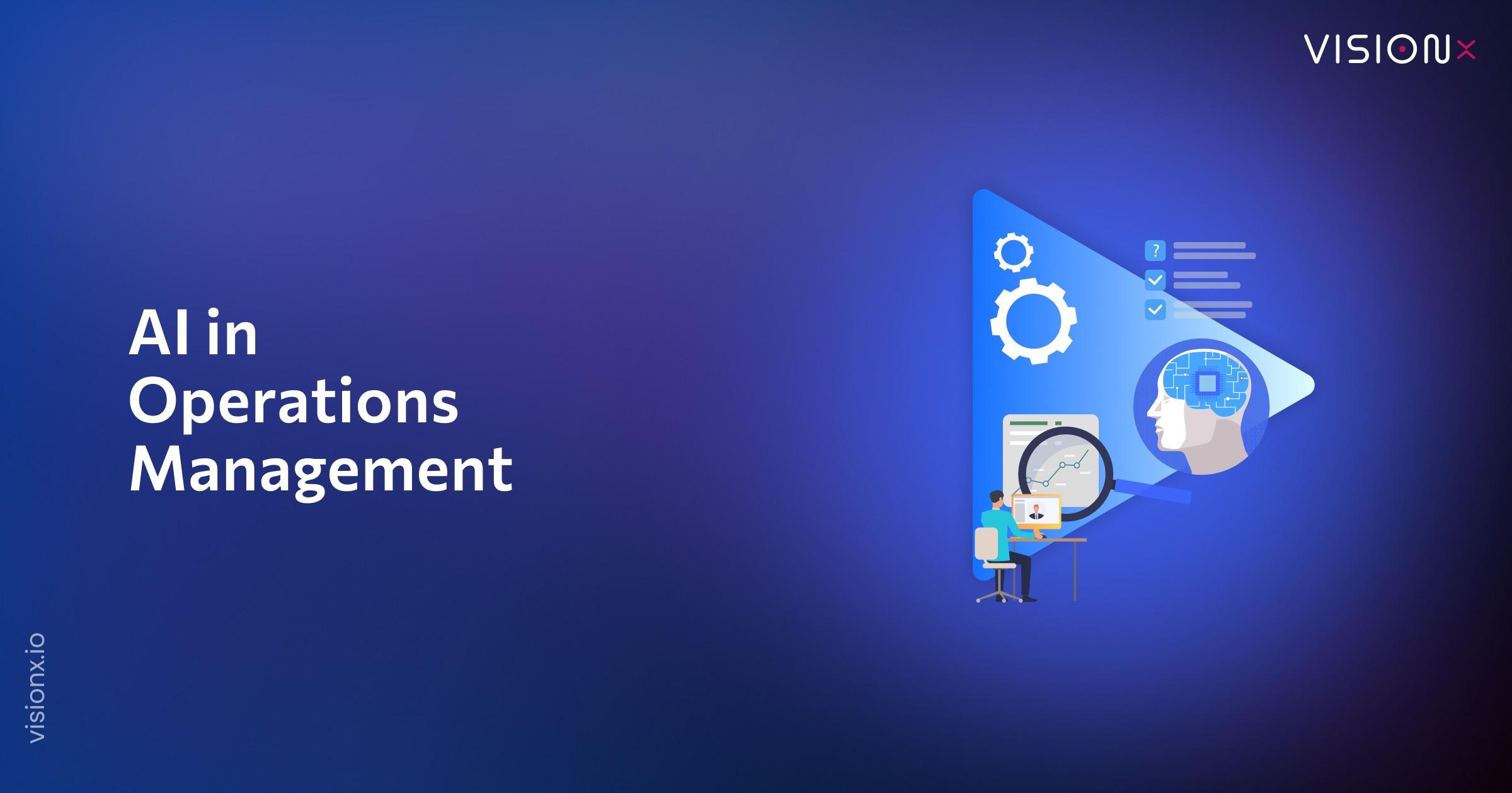
AI in operations management means using smart technologies like machine learning, natural language processing (NLP), and data models to spot patterns, automate tasks, identify issues, and guide better decisions. These systems handle daily business functions that take too much time and brain power.
In simple words, AI management helps a business manage work faster and with fewer mistakes. Artificial intelligence in operations management keeps everything moving and on schedule in terms of supply control, planning, service delivery, and more when it comes to reporting.
Consequently, teams use less energy in the data entry process and other repetitive duties, while leaders concentrate on strategy and performance. In the long run, AI-based tools can influence more robust work processes and contribute to uniformity in business activities.
So, when people discuss or write about AI to make operations more efficient, they are discussing the same mission of making operations smarter, leaner, and cheaper to run.
Key AI Technologies Powering Operations Management
This is enabled by a number of major AI technologies.
- Machine learning studies your past data. It finds trends you might not see. Then it can guess future needs for your inventory or staff.
- Natural language processing reads text like a person would. It can understand customer emails or work orders. Then it sorts them without any help.
- Generative AI writes basic reports or answers common questions. It creates new text from your data.
- Robotics technology has been developed to carry out all sorts of manual tasks in warehouses or factories. The different types of robots can lift, move, and place items, assist in packing orders, or even participate in difficult assembly tasks.
An expert assistant now exists inside many operations. It works around the clock, watches every process, and points out where delays begin. That steady support is particularly what AI in operations management offers to modern businesses.
How AI Improves Day-to-Day Operations
Here is how it helps in real situations.
- The technology checks equipment data to warn you about needed repairs. This warning lets you fix a machine before it breaks and stops the line.
- AI operations management also manages your stock automatically. These calculations determine how much you need to order. This approach prevents you from having too much or too little.
- The system takes over simple jobs like data entry. This automation in operations management means your people can do more important work.
- The final result is a smoother and stronger business. You use AI solutions to move from just putting out fires to actually preventing them.
Why Does AI Matters in Operations Management?
AI in operations management helps operations managers streamline workflows, cut costs, and boost efficiency. AI systems analyze extensive datasets to enable immediate decision-making and process optimization. The AI management system detects production delays and equipment malfunctions and provides market adaptation solutions for businesses.
AI presents operational suggestions and data completion solutions that generate more precise analytical results. The combination of machine learning with automation and predictive analytics enables operations teams to enhance their planning processes while making their everyday tasks more manageable.
A recent McKinsey report (opens in a new tab) estimates the long-term productivity lift from corporate AI use cases to be $4.4 trillion.
Key Benefits of AI in Operations Management
The following are the core benefits of AI in operations management.
Precision in Unpredictable Areas
Firstly, AI sorts out the complex supply chains and gives the much-needed clarity. More precisely, machine learning algorithms look through infinite variables to predict the disruptions and provide alternatives. Therefore, this method changes the uncertainty into trustworthy predictions.
Meeting Customer Expectations
In the meantime, customer requirements are also on the increase. Luckily, AI solutions can assist in satisfying them by providing more personalized recommendations and reducing the time to respond. This is the immediate way of increasing customer satisfaction that fosters greater loyalty.
Automating Routine Work
On the same note, manual data entry and repetitive functions are time-consuming. But automation in operations management performs these tasks with the same level of accuracy. Thus, employees can focus on strategic work that requires human judgment.
Competitive Advantage
The artificial intelligence in operations management companies has a clear market advantage. As an example, they can be used at a lower cost, with reduced errors and response speeds. Notably, these advantages accumulate over time, leaving a major competitive advantage.
Smarter Decision Making
Finally, operations leaders using AI tools base decisions on comprehensive data analysis. In practice, they identify hidden inefficiencies and opportunities. Consequently, this leads to better resource allocation and risk management.
9 Ways to Use AI in Operations Management
These nine methods show how AI in operations management creates tangible improvements across your organization. Each approach solves a specific operational challenge with clear results.
1. AI for Demand Forecasting and Resource Planning
Traditional forecasting often relies on outdated spreadsheets and manual calculations. As a result, this method struggles with market shifts and unexpected demand changes. However, machine learning brings about a total alteration of this situation.
AI management systems analyze your sales history, market trends, and external factors like weather or economic indicators. The system identifies patterns that humans might miss. It then generates accurate forecasts that update automatically as new data arrives.
You can align staffing levels with predicted demand. Procurement teams receive precise material requirements. Production schedules adjust based on real-time customer needs. This proactive approach prevents both shortages and excess inventory.
2. Automate Repetitive Administrative Tasks
Previously, important time that could be used for strategic initiatives is wasted on administrative tasks. However, AI solutions now handle these routine duties with perfect accuracy through automation in operations management.
- Data entry becomes automated through intelligent document processing.
- Report generation happens instantly with generative AI.
- Invoice processing runs without manual intervention.
- Customer communications are handled through smart chatbots.
Your team gains hours each week for more valuable work. And employee morale rises when they prioritize important work over tedious paperwork.
3. Optimize Supply Chain and Logistics with AI
Disruption is an ongoing challenge in today’s supply chains. The use of systems powered by artificial intelligence makes this highly intricate network more resilient and efficient.
The technological solution provides you with continuous monitoring of your complete supply chain. It alerts you to shipping delays, reports port congestion, and identifies alternative routes. If a problem exists, the technology alerts you, and has already suggested options if required. This approach to supply chain forecasting helps you stay ahead of potential issues.
Key benefits include:
- Reduced shipping costs through optimized routes
- Lower inventory levels without risking stockouts
- Faster response to supply chain disruptions
- Better supplier performance tracking
As a result, your operations become more agile and cost-effective. You can then promise reliable delivery dates with greater confidence.
4. Improve Quality Control with AI Vision Systems
Human inspectors have difficulties detecting minor defects because their performance declines when they need to work extended shifts. AI vision systems deliver exact quality control operations through their ability to operate endlessly without fatigue.
These systems employ cameras together with sensors to perform exact product inspections. The automated defect detection system identifies faults that human vision cannot detect through its ability to find tiny cracks, color differences, and dimensional measurement errors. The inspection process treats all items equally when it comes to quantity production.
The result is significantly higher quality standards and fewer customer returns. The production process benefits from waste reduction because early defect detection prevents further manufacturing of defective products.
5. Enhance Decision-Making with Predictive Analytics
Operations leaders face endless daily choices that they must make with insufficient information. Fortunately, AI-powered predictive analytics provides organizations with deep information about their data through advanced analytical methods.
Specifically, an AI operations management system analyzes past data patterns together with current environmental factors to create predictions about what will happen next. The system enables the prediction of customer churn, product demand growth, and process failure points. An AI management system provides precise probability scores alongside suggested response measures.
The process of problem-solving changes from reactive methods to proactive planning. Data analysis replaces instinctual decision-making for making choices about inventory management, production capacity, and market development.
6. Strengthen Workforce Management and Productivity
Balancing team capacity with workload requirements is an ongoing challenge. AI management tools create optimal schedules and identify productivity opportunities.
The technology analyzes historical patterns to forecast workload peaks and valleys. It then generates schedules that match staffing to expected demand. The system also identifies process bottlenecks that slow your team down.
You can deploy your people where they’re needed most. Employees enjoy more predictable schedules. Overall productivity increases as obstacles are removed.
7. AI for Predictive Maintenance and Asset Management
Unexpected malfunction of the equipment causes production to be stopped and costs to be increased. AI in operations management makes maintenance predictive instead of reactive.
The installation of sensors on your machines enables the gathering of real-time data. The analysis of this data by the machine learning algorithms leads to the carrying out of the monitoring of even minor variations in vibration, temperature, or performance. This then allows the system to alert you to possible failures several weeks in advance, enabling proactive predictive maintenance.
- Do maintenance during the downtimes that you have already planned
- Decrease the costs incurred from emergency repairs
- Enlarge the time that the equipment is used
- Make the work environment safer
- Your manufacturing processes will be more efficient as you will have fewer unexpected stoppages.
8. AI for Continuous Process Optimization
Even well-designed processes have hidden inefficiencies. AI management tools constantly monitor and improve your operations without human intervention, creating true business process automation.
The system analyzes how work actually flows through your organization. It identifies delays, redundancies, and quality variations. Then it tests small adjustments and measures the results. Successful improvements are automatically implemented across your operations.
This creates a cycle of constant refinement. Your processes become faster, cheaper, and more reliable over time.
9. AIOps for IT-Driven Operational Excellence
IT operations face unique challenges with system monitoring and incident response. AIOps applies artificial intelligence specifically to IT management.
The platform automatically detects anomalies in system performance. AIOps can predict potential outages before they affect users. When issues occur, the system diagnoses the root cause and often resolves it without human help.
Your IT team does not have to deal with so many problems, and they have more time for strategic projects. The reliability of the system goes up tremendously, which in turn supports all other business activities.
How Can You Start Implementing AI in Your Operations?
The process of implementing AI in operations management creates a confusing situation for most operational teams. The essential starting point involves selecting particular actionable steps that demonstrate obvious advantages. Your organization will achieve momentum through this method while demonstrating its value.
To explore how businesses successfully move from planning to execution, check out our guide on how to incorporate AI into your business.
To start your implementation, here is a simple way to do it.
I. First, Identify your Biggest Operational Headache
To begin, look for that one repetitive task that consumes your team’s time. For instance, it’s manual data entry between systems, constant inventory miscalculations, or answering the same customer questions repeatedly. Choose something specific where you can measure improvement.
II. Next, Check your Data Foundation
After identifying the problem area, look at what information you’re already collecting about this problem. Pull your recent spreadsheets, system logs, or customer service records. Then, make sure your data is consistent and organized enough to build upon.
III. Now, Launch a Small Pilot Program
Start with just one team or a single process. Keep the scope tight so you can manage it effectively. This approach lets you work out any issues before expanding. Watch how your team interacts with the new AI-powered tools.
IV. Then, Train your Team with Hands-on Support
Guide your team through the entire process of using the new system. Illustrate how it simplifies their daily work. Gather their input through listening and modify your method to suit them. Their acceptance is vital for the success of the new system.
V. Finally, Measure your Results and Plan your Next Move
Track your progress against the goals you set initially. Share these outcomes with your leadership team. Use what you’ve learned to determine where to implement AI solutions next in your operations.
How VisionX Helps Simplify Your Operations with AI
You don’t need to start from zero with AI operations management. At VisionX, we become your guide. We work with you to map your goals and build a custom gen AI strategy. Then, we help you choose the right infrastructure so your data stays secure and your systems run efficiently.
Next, our team builds custom AI models designed specifically for your operations. We apply computer vision, data science, and diverse AI techniques, allowing your systems to perceive, forecast, and remedy obstacles. The models we create are then seamlessly incorporated into the applications your staff utilizes regularly. This is how we make artificial intelligence in operations management a practical part of your daily work.
The technical work becomes our responsibility when you join us as a partner. The results show improved workflow efficiency, reduced mistakes, and enhanced decision-making capabilities.
Ready to simplify your operations? Let’s build your AI solution.
FAQ
Frequently asked questions
Choose AI based on your specific needs. Machine learning predicts demand and maintenance needs. Computer vision handles quality inspection. Natural language processing manages documents and customer service. The best choice depends on your operational challenges and data availability.
Common tools consist of machine learning platforms for advanced analytics, seeing machines for monitoring quality, and robotic process automation for office work. AI-powered inventory control systems and predictive maintenance solutions are other areas of application. All these tools blend in well with the current ERP and production systems.
AI is capable of handling most of the daily operation processes, although human supervision is imperative. AI is very good at maintaining equipment, forecasting demand, automatic reporting, and notifying about quality problems. Nevertheless, human judgment is set to continue to play a role in strategic choices and the ability to solve problems of complexity.
AIOps is used in IT operations, where processes are applied by artificial intelligence. It concentrates on the performance of the monitoring system, application of outage prediction, and automation of incident response. Whereas regular operations AI caters to the manufacture, supply chain, and quality management, AIOps deals with the preservation of IT infrastructure and app functionality. Both are similar in utilizing similar technologies, but they cater to different localities.