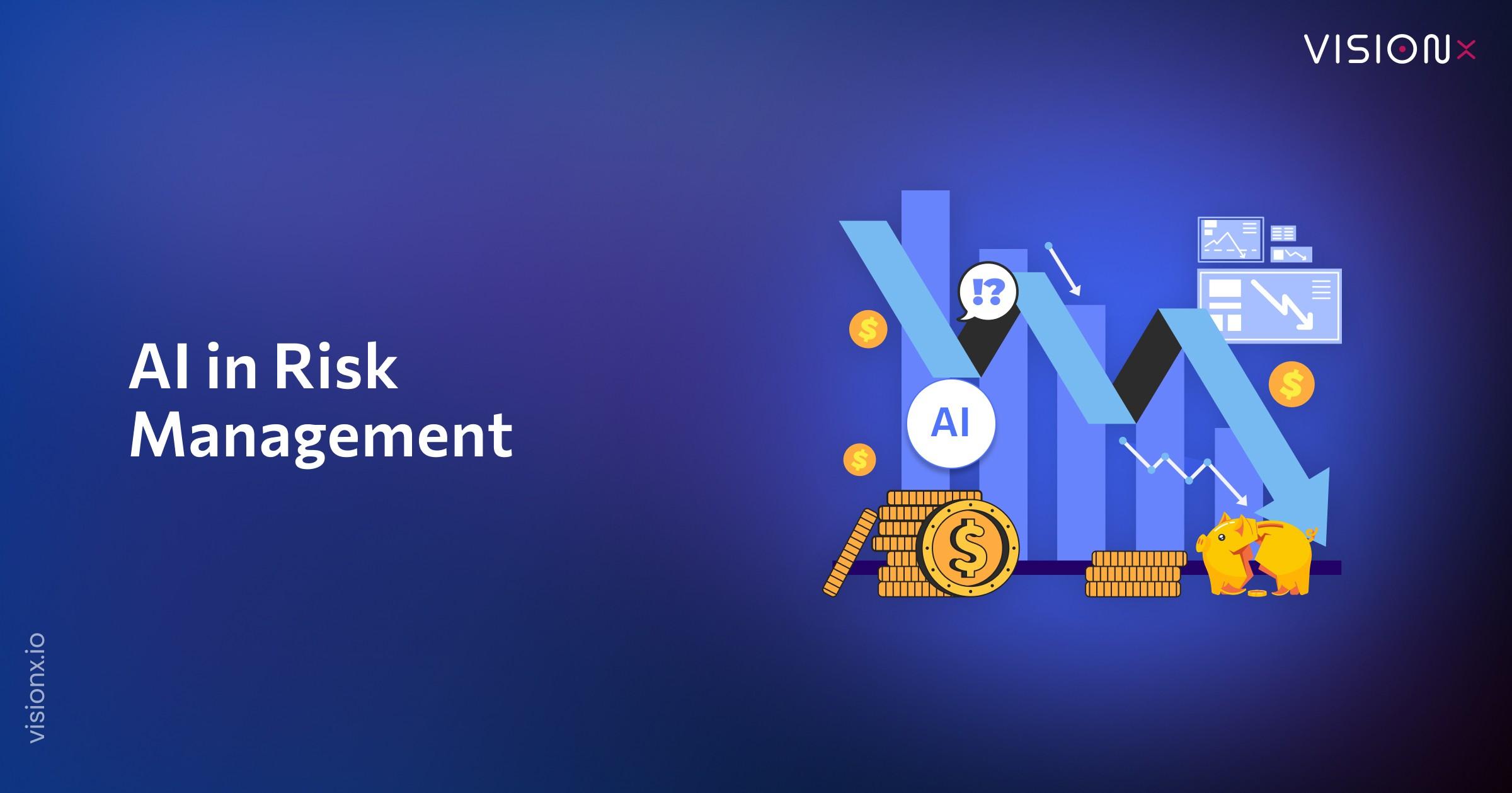
All businesses are exposed to risks such as financial losses, cyber threats, compliance, and operational challenges. In the past, these risks were identified and controlled with the help of human judgment and manual analysis. However, the emergence of AI in risk management has led to the situation where companies utilize data-driven insights to anticipate potential issues before they get out of control.
AI risk management enables companies to analyze large volumes of data, anticipate risk, and make more precise decisions. The report by Deloitte points to a potential increase in fraud losses in the US financial sector, caused by the use of generative AI, to a staggering $40 billion by 2027 (opens in a new tab). This is a major reason why companies should invest in advanced, AI-driven risk mitigation solutions.
This blog covers how businesses use AI in risk management to spot risks sooner, make better decisions, and protect their operations.
Key Takeaways
- AI in risk management uses advanced technologies like machine learning and predictive analytics to identify, assess, and reduce risks by analyzing large volumes of data.
- It improves accuracy, reduces human error, and strengthens decision-making across operations.
- Core technologies include machine learning, NLP, RPA, and computer vision, each supporting different areas of risk control.
- Businesses use AI for fraud detection, cybersecurity, supply chain stability, healthcare safety, and compliance.
- Key challenges include data quality, integration issues, ethical concerns, and the need for transparent, well-governed AI systems.
What is AI in Risk Management?
AI in risk management refers to the use of AI technologies to identify, assess, and mitigate risks in business operations. These AI systems use machine learning and predictive analytics to analyze large volumes of structured and unstructured data to uncover patterns, detect anomalies, and predict potential threats. This automation helps businesses to improve risk assessment and decision-making.
Traditional Risk Management vs. AI Risk Management
The following comparison shows how traditional and AI risk management differ from each other.
| Aspect | Traditional Risk Management | AI Risk Management |
|---|---|---|
| Data Handling | Manual analysis of limited data | Continuous analysis of large, complex datasets |
| Speed | Periodic reviews, slower response | Real-time monitoring and alerts |
| Accuracy | Prone to human error | Higher accuracy through pattern recognition |
| Prediction | Based on past experience | Predictive insights using historical and real-time data |
| Decision Support | Relies on human judgment | Provides useful recommendations for faster decisions |
Why Modern Businesses Need AI for Risk Management?
One of the major issues that modern businesses face is the risk factors associated with their operations, like cyber attacks, financial loss, etc. These threats not only surface unexpectedly but also grow in intensity, making traditional risk management less efficient.
The role of AI in risk management is to give companies the capability to handle huge volumes of data, find undiscovered patterns, and detect potential risks before they escalate. The global AI in risk management market is forecasted to be worth about USD 39.9 billion by 2033, (opens in a new tab) which is a clear indication of how businesses are incorporating artificial intelligence in risk management solutions.
These are the reasons why implementing AI in risk and compliance is a good idea:
- Spot problems and threats faster with AI-powered analysis.
- Make smarter choices using clear data to improve the decision-making process.
- Reduce mistakes and human bias for more accurate risk assessment.
- Save time and use resources better, enhancing risk management practices.
Through the use of automation risk management, companies can manage risks in a more effective way, shorten their response time, and at the same time be in a position to make data-driven decisions with confidence.
Benefits of AI in Risk Management
Modern businesses benefit practically from AI and machine learning for risk management by making better judgments, responding more quickly, and taking fewer risks. The following are some main advantages of using AI for risk management:
Enhanced Data Analysis and Real-Time Monitoring
Risk management AI scans through a very large volume of data in a short time, figures out what the risks might be, and provides information that enables the team to take action before the issue gets out of control. With AI solutions, companies can have an immediate overview of risks and therefore, be able to take a pre-emptive stance.
Improved Predictive Capabilities
By analyzing patterns, trends, and past data, AI risk management is the best way for businesses to foresee the riskiest situations and to take the safest decisions in order not to lose their assets. Predictive analytics is what gives companies the power to spot weaknesses in advance of a significant loss.
Reduction of Human Error and Bias
AI in risk management offers impartial guidance, reducing errors that come from manual operations or individual judgment. This ensures that decisions made by different groups are in harmony. The use of AI helps businesses to be less exposed to mistakes deriving from subjective evaluations and human neglect.
Automation of Compliance and Reporting
Tasks of daily routine, such as report generation, regulatory checking, and record-keeping, become easy if AI tools are used in risk management, as they also facilitate time-saving and provide accurate and trustworthy documentation. This form of automation risk management helps organizations maintain consistency, reduce human error, and stay compliant with evolving legal and industry standards.
Cost and Resource Efficiency
Employing AI risk management methods enables companies to free up their workforce and resources for more urgent tasks. It also helps cut down on unnecessary expenses and generally takes their operational level to a higher one with better outcomes.
Cybersecurity Enhancement
AI in risk management is capable of 24/7 monitoring of the network and promptly indicates the sources of potential threats. It also secures the sensitive data, thereby not only ensuring that the business remains safe but also that it is resilient in times of difficulty.
Practical Applications: How Businesses Use AI in Risk Management
Here’s how businesses are using AI in risk management:
Financial Services: Fraud Detection and Credit Risk Assessment
AI in financial risk management includes detecting fraudulent transactions and estimating credit risk. For example, a bank like JPMorgan Chase engages AI risk management instruments to scrutinize the transactions, spot the unusual patterns, and thus, stop the unauthorized transfers from happening.
Credit scoring agencies incorporate AI and machine learning to improve risk management through the analysis of payment histories and economic indicators. As a result, the occurrence of defaults is minimized.
Healthcare: Patient Safety and Operational Risk Management
In healthcare, risk management using AI helps prevent errors in medical care and handles operational risks. For instance, IBM Watson Health scans the patients’ health records in order to prevent medication errors or to intervene in time for the high-risk situations.
Besides this, Mount Sinai Hospital is putting AI solutions to good use for staff scheduling and equipment delegation. Through this automation in risk management, patient safety is guaranteed, and hospital management becomes easier.
Supply Chain: Disruption Prediction and Logistics Optimization
Through the use of AI in risk management and compliance, the disruptions can be predicted, and logistics staff can become more efficient. For example, with the assistance of AI systems, DHL and Amazon are able to forecast demand, keep track of shipments, and resolve binding issues before they affect the delivery schedule. It helps in the reduction of losses emanating from operational delays.
Cybersecurity: Threat Detection and Response
AI risk management and fraud detection tools help to improve security by making the system more secure through fast identification of threats and quick response to breaches.
For example, companies such as Darktrace utilize AI systems to keep an eye on network activities, recognize unusual behavior, and disconnect the parts of the network that have been compromised. Such implementations not only support compliance with regulations but also enable the response time of the IT department to be faster, thus, the risks can be controlled efficiently.
Core AI Technologies Used in Risk Management
The following are the AI technologies that businesses rely on to manage risks in their operations.
Machine Learning
Machine learning detects abnormalities and establishes anomalies in large volumes of data. As an example, it is able to identify suspicious financial activity, identify anomalies within supply chains, or identify latent trends in operational data. It assists the organizations in predicting possible problems before they get out of hand because it keeps learning through new information.
Natural Language Processing
NLP extracts unstructured information from emails, reports, customer responses, and social media feeds. It helps businesses identify consequences of compliance risks that may have gone unnoticed otherwise. This includes sentiment monitoring, early signs of operational problems, and market/regulatory trends that would not have been discovered through manual review.
Robotic Process Automation
Repetitive and time-consuming processes, like report generation, data input, record reconciliation, and compliance checks, are automated processes through which RPA saves time. It minimizes human error and allows employees to concentrate on more strategic work, as well as maintain stable workflows that are effective and dependable.
Computer Vision
Computer vision helps in the interpretation of images and videos that are used in surveillance, monitoring, and quality control. It is capable of identifying manufacturing errors, structuring safety risks, tracking compliance with operational standards, and notifying of abnormal activities in real time. CV enables businesses to sustain safety, security, and operational superiority.
Challenges and Risks Associated with AI
The use of AI in risk management is highly beneficial, yet companies have to overcome a few essential challenges:
- Data Quality and Availability Problems: Risk management AI requires the quality and completeness of information. The data of low quality might limit the functionality of AI systems.
- Algorithms, Bias, and Ethics: AI risk management in banks and other industries can indicate historical prejudices. The fair and ethical decision-making process is guaranteed by the monitoring of the AI solutions.
- Integration with Legacy Systems: The artificial intelligence in risk management has to integrate well with the existing IT infrastructure so that the risk management structures can work effectively.
- Transparency and Explainability: AI in risk and compliance requires clear decision paths. Teams need AI adoption that allows interpretation and supports accountability.
- Regulatory and Compliance Issues: AI in risk and compliance should be regulated by rules and regulations. An effective AI risk management framework prevents penalties and reputational damage.
- Emerging AI-related threats: AI and risk management reduce traditional threats but can create new ones, such as cybersecurity gaps or operational failures. Continuous monitoring of risk management using AI is essential.
Best Practices for Implementing AI in Risk Management
Whether an organization uses a simple risk management process or an advanced AI system, these practices ensure better accuracy, transparency, and long-term success.
1. Start with Pilot Projects
Launching small AI projects before scaling allows businesses to test feasibility and measure impact. For instance, a financial institution might first deploy AI in fraud detection before expanding into credit risk assessment. This minimizes disruption and builds confidence in AI adoption.
2. Build Cross-Functional Teams
AI in risk management works best when data scientists, compliance officers, and business leaders collaborate. Each brings unique expertise to strengthen decision-making and improve how AI aligns with company goals and regulatory compliance.
3. Ensure Strong Data Governance
AI risk management systems depend on clean, high-quality data. Establish clear policies for data collection, access, and storage to enhance accuracy and reliability. Strong data governance also prevents biases that can affect AI-powered decision-making processes.
4. Follow Industry Frameworks and Standards
Adopting frameworks like the NIST AI RMF or ISO 31000 provides structure and ensures compliance. These frameworks help organizations assess potential risks, maintain transparency, and align AI systems with ethical and regulatory expectations.
5. Foster Continuous Learning and Adaptation
AI risk management is not static. Encourage teams to learn from outcomes, refine algorithms, and update models regularly. Continuous improvement ensures your risk management AI evolves with emerging threats and remains effective in a fast-changing environment.
How VisionX Transforms AI in Risk Management
We design custom Gen AI solutions tailored to each organization’s specific needs. Our team analyzes available workflows, compliance requirements, and risk management frameworks to develop solutions that blend with the day-to-day business.
We help companies identify possible hazards early, improve decision-making, and streamline reporting in real time by fusing automation, machine learning, and natural language processing.
Our emphasis on precision, openness, and compliance with regulations guarantees that each solution yields quantifiable benefits. At VisionX, we use sophisticated, future-ready Gen AI technologies to help enterprises improve their risk management strategies.
FAQ
Frequently asked questions
AI analyzes data, detects potential risks, predicts threats, and automates reporting to improve risk management processes.
Use cloud-based AI tools, focus on critical risk areas, and adopt cost-effective AI solutions for compliance and fraud detection.
Costs include software, infrastructure, and training, while ROI comes from reduced risks, efficiency gains, and better regulatory compliance.
Evaluate your risk management needs, data availability, scalability, and vendor support to select suitable AI systems.
It is a structured approach combining AI technologies, processes, and governance to identify, assess, and mitigate risks effectively.