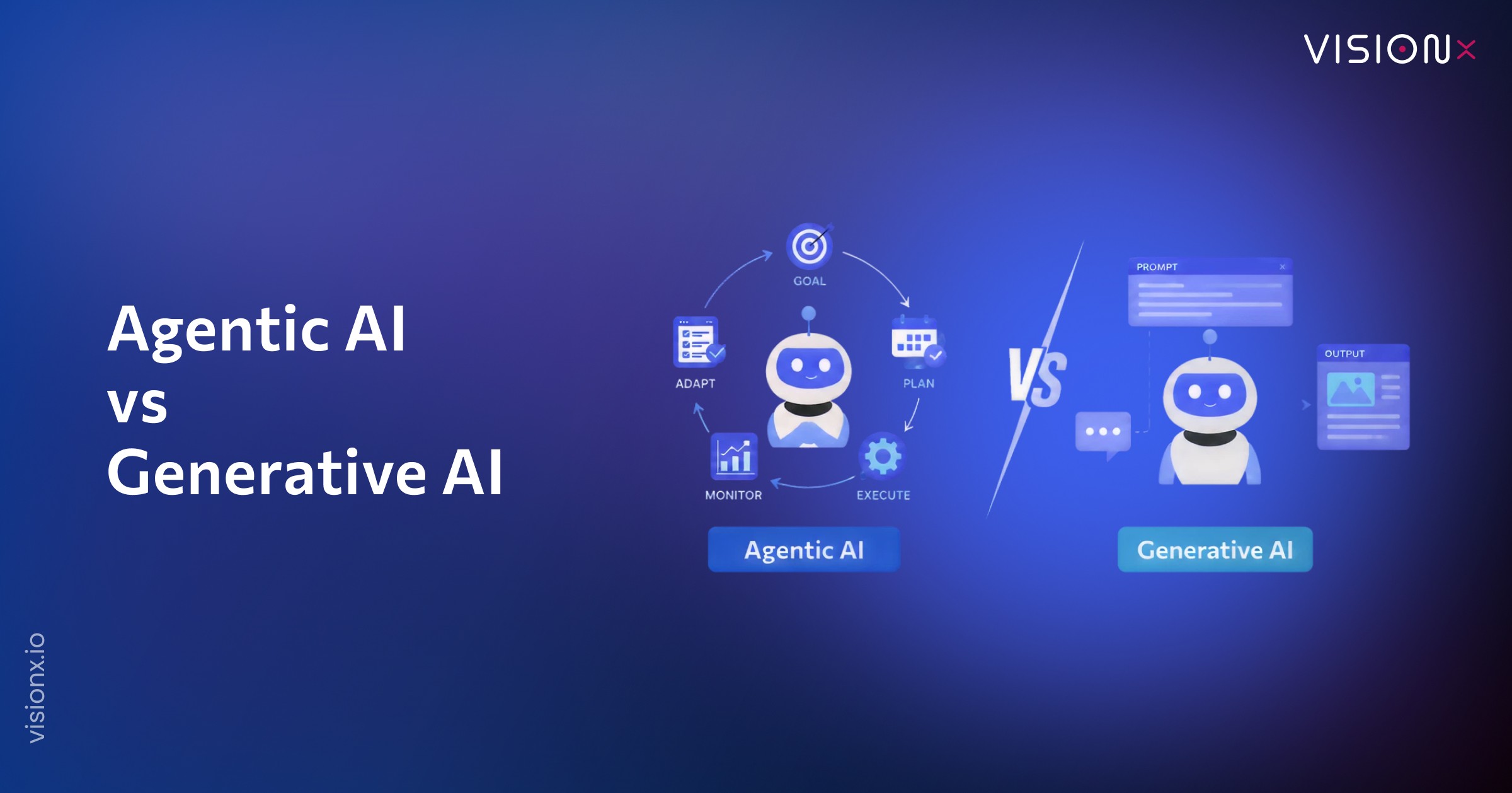
If you’ve used ChatGPT, Claude, or other similar tools, you kind of know the pattern that generative AI follows ask a question, get an answer. It feels powerful, yes. Yet, it is still reactive by nature and dependent on your input. So, what is agentic AI, and why is it getting so much attention?
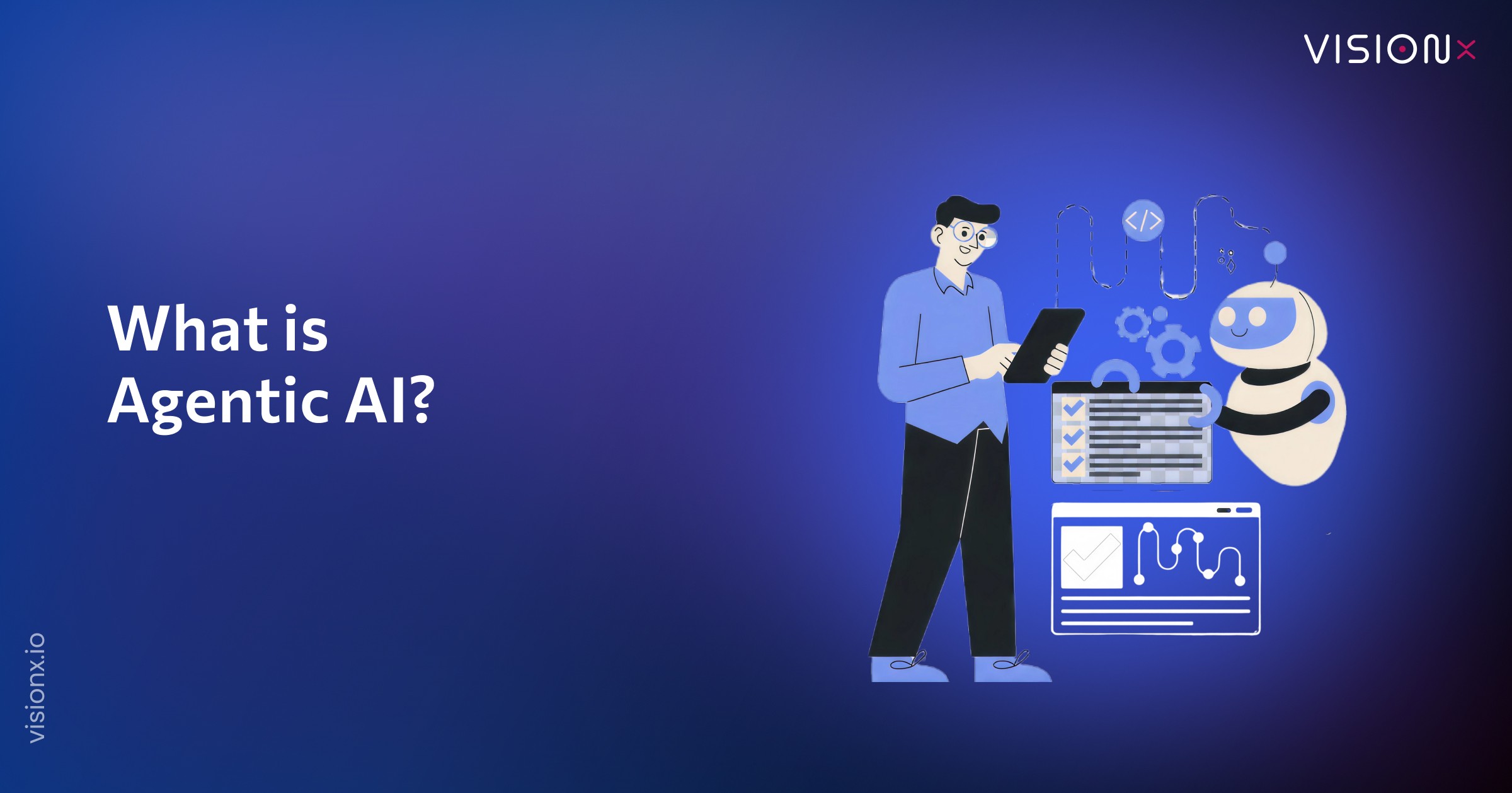
Agentic AI refers to AI systems that can perceive their environment, reason through complex problems, and take autonomous action, completing multi-step tasks with little to no human hand-holding. These systems not only respond, but they also plan, decide, execute, and adapt.
As per Gartner, it is expected that by 2028, 33% of enterprise applications will include agentic AI technology. Also, Gartner says that at least 15% of day-to-day work processes and decisions will be made with the help of agentic AI systems by 2028. These forecasts highlight the growing agentic AI adoption across enterprises.
In this article we’ll look at what agentic AI actually is, how it operates, the advantages and downsides, and some practical points for implementation.
Key Takeaways
- Agentic AI can autonomously plan, make decisions, and complete multi-step tasks with minimal human involvement.
- Unlike generative AI, which responds to prompts, agentic AI systems take action to achieve goals and adapt to changing conditions.
- Businesses use agentic AI to automate workflows across customer service, sales, finance, IT, healthcare, and software development.
- Major benefits include higher productivity, improved scalability, faster decision-making, and reduced operational costs.
- Successful adoption requires strong data infrastructure, governance, security controls, and a clear implementation strategy.
What is Agentic AI?
Agentic AI refers to AI systems composed of autonomous agents capable of setting goals, planning actions, and executing tasks without detailed human commands. Each agent acts like a smart software worker that can perceive its environment (via data and APIs), reason about complex objectives, and interact with other tools or systems. Key attributes include:
- Autonomy & Initiative: Agents act proactively toward their goals rather than reacting to prompts.
- Goal-directed Planning: The agent plans its actions to achieve high-level goals through decomposing them into a series of steps.
- Tool Use & Integration: Agents use external software or databases (APIs, web) as remote digital employees to perform tasks with enterprise tools.
- Learning and Adaptation: Agents learn from outcomes and feedback. They rely on memory, both short-term and long-term context, so next time the decision is sharper and more consistent.
- Collaboration: Several agents can collaborate on complex tasks, specializing in particular parts of the task.
- Agency: Critically, “agentic” refers to the agency of the system, that is, its ability to act purposefully and autonomously.
Why Agentic AI Matters for Businesses
Repeatable workflows are crucial for businesses every day. Leads are pursued by sales teams, tickets are dealt with by support teams, campaigns are monitored by marketing teams, and invoices are managed by finance teams. There are several of these jobs that require complex systems and decision-making.
Agentic AI enables these actions to be integrated into a single smart sequence. AI agents can automate actions and facilitate quicker decision-making, rather than manually switching between CRMs, spreadsheets, emails, and tickets.
This is already the trend in various sectors. According to the global survey by McKinsey, 62% of organizations are trialing AI agents or are expanding their use of AI agents. This seems to suggest that agentic AI is starting to become a viable solution for better productivity, automating certain tasks, and helping optimize processes.
How Does Agentic AI Work?
A loop explaining AI agentic workflows is as follows:
Perception/Context Gathering:
The system consumes data that is relevant to the task. That can be user inputs, emails, database records, streaming sensors, or logs. It often leans on retrieval-augmented generation (RAG) to retrieve and then sort the useful documents and data bits from a knowledge store.
Reasoning and Planning Engine:
The reasoning engine typically uses one or more LLMs and specific algorithms. The agentic systems break down the goal (“plan a marketing campaign”, “process support ticket”) into sub-tasks and an ordered plan, reasoning in a chain of thought. It chooses the tools or integrations (APIs, functions) that it will employ for each step, based on business rules and policies.
Memory and Knowledge:
The agentic AI keeps two kinds of memory: short-term memory for the live conversation or the current workflow bits, and long-term memory for older interactions, user preferences, or repeated data patterns. This memory component helps the agent keep choices consistent and bring back relevant details from prior runs, not just the present moment.
Action and API Execution:
The agent executes actions based on code or API. It could ask a CRM system, update a database, send an e-mail, or place an order on a web service, for instance. Unlike a Chatbot, the agent is a human who communicates with software on the user’s behalf.
Feedback and Learning:
The agent follows up on outcomes after every action. It poses the question, “Did the job work? Are the goals met?” Otherwise the agent replans or corrects the approach. The process is repeated, but with adjustments to the plan and lessons learned from each iteration.
Types of Agentic AI Systems
- Single-Agent Systems:
One AI agent does all the tasks one at a time. Best suited for well-defined, narrowly scoped problems with a strong emphasis on speed over complexity.
- Multi-Agent Systems:
Several specialized agents work together and break up large tasks into “chunks”. Multi-agent systems are much more scalable and versatile in enterprise solutions.
Agentic AI vs Generative AI vs Automation
| Aspect | Traditional AI | Generative AI | Agentic AI |
| Core Function | Execute fixed rules or models on input data | Generate content (text, images, code) from prompts | Set goals and complete tasks end-to-end |
| Input | Structured data, predefined flows | User prompts (text, questions) | High-level objectives/goals |
| Output | Deterministic result or prediction | New content (article, code snippet) | Completed workflow or action (e.g., booked meeting) |
| Agency | Passive – no initiative | Reactive – content upon request | Autonomous – acts independently |
| Example | Data entry bot in a form | A chatbot that answers queries | Digital assistant that autonomously processes customer issues |
Examples of Agentic AI
Agentic AI is already being applied across industries. Common agentic AI examples include:
- Customer Service: AI agents respond to customer support tickets, handle returns, and communicate with the CRM system without human intervention.
- Sales and Marketing: Agentic automation can lead to identification, customized follow-up, meeting setup, and pipeline updates.
- IT and Operations: AI agents can help handle tickets, conduct diagnostics, automate workflows, and alert teams.
- Finance: AI agents help with fraud detection, loan processing, credit risk analysis, and customer engagement.
- Healthcare: Agents can manage patient records, make appointments and help with treatment follow-up.
- Research and Development: AI agents can help researchers analyze studies, plan tests, and summarize results.
- Software Development: Development teams use agentic AI to automate testing, deployment and API based workflows.
- Personal Tasks: AI agents can manage personal tasks such as trip planning, bookings, and schedule management.
Benefits of Agentic AI for Businesses
The benefits that this automated intelligence brings are as follows:
Greater Efficiency and Productivity:
Agentic AI can run an entire workflow, not just a single isolated task. That cuts down on manual effort, it speeds things up, and it lets the team spend time on higher-value problems instead.
Scalability Across Operations:
AI agents can juggle thousands of tasks at the same time, like customer conversations, workflow approvals, or internal requests, without needing extra headcount.
Real-Time Adaptability:
Traditional automation tools usually stall when things change. Agentic AI systems can react to new conditions, then modify what it does based on fresh signals or evolving business needs.
More Consistent Decision-Making:
Agentic AI solutions tend to stick to predefined rules, workflow steps, and business policies, so fewer mistakes happen and the process is more reliable overall.
24/7 Availability:
AI agents can keep going nonstop, no fatigue involved. So businesses get faster response times and support that doesn’t pause.
Innovation and New Business Opportunities:
With agentic AI tools, companies can craft smarter services, deliver more tailored customer experiences, and build new AI-driven business models.
Lower Operational Costs:
When repetitive work gets reduced and workflows get streamlined, efficiency rises. That typically means operational expenses go down as well.
Risks and Limitations of Agentic AI
However, greater autonomy also amplifies risks:
Safety and Error Risks:
Agentic AI systems can act in a kind of unpredictable way, and small mistakes may snowball pretty fast across workflows if the actions are fully automated, so it gets a bit messy.
Bias and Fairness Issues:
AI agents can take up biased datasets or sketchy decision habits, which then result in uneven treatment, or wrong outcomes that look convincing.
Security and Privacy Concerns:
Because these agents commonly access internal systems and handle sensitive information, weak guardrails can become real security holes.
Complexity and Governance Challenges:
Getting autonomous AI systems built, observed, and even governed is not simple. You need solid AI infrastructure, careful oversight, and clear policies; otherwise, it can be difficult to keep track of activities.
Implementation Considerations for Business
Here’s what businesses should consider while implementing agentic AI systems for sustainable success and achieving measurable outcomes.
- Set Clear Business Goals: Leave agentic AI to tackle certain projects in a business’s operational or strategic goals, such as cutting costs, boosting customer satisfaction, and improving safety.
- Ensure the Right Infrastructure is in Place: Deploying agentic automation often requires the use of cloud hosting, application programming interfaces (APIs), data pipelines, and orchestration tools that give AI agents permission to access and interface with business systems.
- Prioritize Data Quality and Accessibility: AI agents require connected and high-quality data from customer relationship management (CRM) systems, enterprise resource planning (ERP) systems, support systems, and internal databases.
- Establish Strong Governance and Security: Businesses must develop strong access controls, monitoring systems, and policies to help agents operate safely and keep compliance hours in check.
- Prepare Teams for Adoption: Staff need training for the right use of AI agents. Encourage collaboration between IT, operations, legal, and leadership for a complete integration.
- Start with Small-Scale Deployments: Starting with smaller ‘test’ cases like customer support and automation of internal processes can help with the scale of agentic AI across the organization.
- Select the Right Implementation Strategy: Based on readiness, businesses can pick platforms for agentic AI or build them as per their requirements.
- Evaluate Costs and Business Value: Businesses should track and record productivity gains in agentic AI post the initial investment, changes in operational efficiencies, and gains.
Talk to VisionX About What Agentic AI Can Do for Your Business
VisionX builds custom AI solutions for enterprises across computer vision, natural language processing, generative AI, and data science. We partner with business owners to find out where AI can create real operational value, then we build systems that match your processes and your data.
Reach out to our team, so we can talk through how agentic AI could back your business goals and what it would take to put it in place effectively.
Frequently Asked Questions About Agentic AI
What is the simple agentic AI definition?
Agentic AI refers to AI systems that use large language models (LLMs) to make decisions, take actions, and complete tasks autonomously to achieve specific goals with minimal human supervision.
What is the difference between generative AI and agentic AI?
Generative AI creates content such as text, images, or code, while agentic AI can plan actions, use tools, and complete multi-step tasks independently.
What is agentive AI?
Agentive AI is another term often used to describe AI systems with autonomous decision-making and goal-oriented behavior, similar to agentic AI.
Is ChatGPT an example of agentic AI?
Standard ChatGPT is primarily a generative AI tool, but when combined with tools, memory, and automation workflows, it can function more like an agentic AI system.
Is agentic AI the same as automated intelligence?
No. Traditional automation follows fixed rules, while agentic AI can adapt, reason, and make decisions based on changing conditions.