
In today’s business environment, enterprise project portfolio management (EPPM) is crucial for organizations to prioritize, plan, and execute their projects effectively. EPPM is a strategic approach that helps organizations manage and align their portfolio of projects with their overall business objectives. In this blog post, we will explain the strategy to manage EPPM and how it can help organizations overcome their present issues.
What is Enterprise Project Portfolio Management?
Enterprise project portfolio management (EPPM) is managing an organization’s portfolio of projects to achieve strategic business objectives. EPPM enables organizations to prioritize projects, allocate resources, and align projects with their business strategy. With EPPM, organizations can gain a comprehensive view of their projects, resources, and budgets and make informed decisions to optimize their project portfolio.
Every Enterprise Wants
Every enterprise wants to achieve its business objectives by managing its project portfolio effectively. EPPM helps organizations achieve this by:
- Aligning projects with business strategy: EPPM enables organizations to align their projects with their overall business strategy. What resources are allocated to suitable projects by prioritizing projects that support business objectives?
- Maximizing resource utilization: With EPPM, organizations can optimize utilization by allocating resources to the most critical projects. This helps organizations avoid overutilization or underutilization of resources.
- Improving project performance: EPPM enables organizations to track the performance of their projects and make informed decisions to improve project performance. Organizations can deliver projects on time and within budget by identifying and addressing project issues.
- Reducing project risk: EPPM enables organizations to identify and mitigate project risks. Organizations can focus and allocate resources to the projects with the highest risk by comprehensively viewing their portfolio.
Present Issues of Enterprises Today
Despite the benefits of EPPM, organizations need help managing their project portfolio. Some of the present issues of enterprises today are:
- Lack of visibility: Many organizations need more visibility into their project portfolio, which makes it challenging to prioritize projects and allocate resources effectively.
- Limited resources: Organizations often need more help, making executing all the projects in their portfolio difficult.
- Unclear project objectives: Many organizations need help setting clear goals, leading to project delays and cost overruns.
- Ineffective communication: Ineffective communication between project teams can lead to misaligned priorities, missed deadlines, and project failures.
Strategy to Overcome Issues
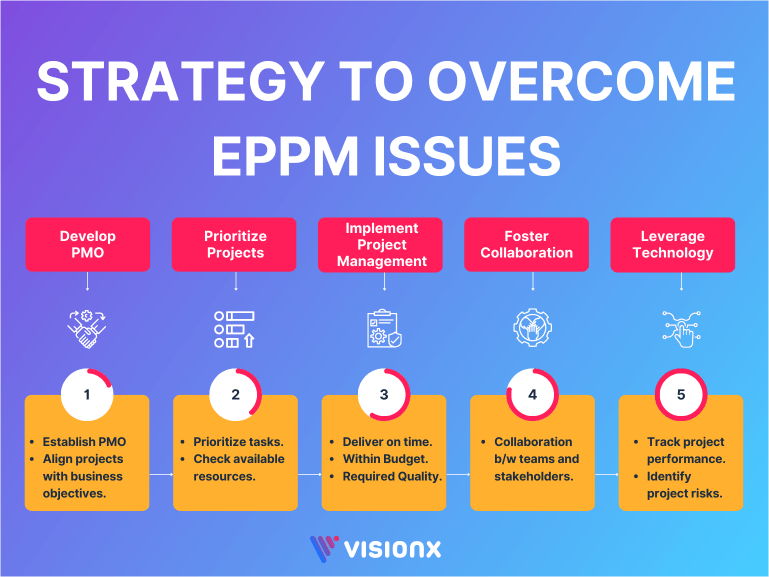
To overcome these challenges, organizations must adopt a strategic approach to manage their project portfolio effectively. The following are the strategies organizations can implement:
- Develop a project management office (PMO): Establishing a PMO can help organizations gain visibility into their project portfolio, align projects with business objectives, and improve project performance.
- Prioritize projects: Organizations must prioritize their tasks based on their strategic importance and available resources. Organizations can ensure that resources are allocated effectively by focusing on critical projects.
- Implement project management best practices: Organizations should adopt best practices to ensure that projects are delivered on time, within budget, and to the required quality.
- Foster collaboration: Effective collaboration between project teams and stakeholders is critical for success. Organizations should foster collaboration by establishing clear communication channels and encouraging regular communication.
- Leverage technology: Organizations can leverage technology to improve EPPM. Project management software can help organizations gain visibility into their project portfolio, track project performance, and identify and mitigate project risks.
Conclusion
In conclusion, EPPM is essential for organizations to manage their project portfolio effectively and achieve their business objectives. Organizations can overcome their present issues and optimize their project portfolio by adopting a strategic approach. Developing a project management office, prioritizing projects, implementing best practices, fostering collaboration, and leveraging technology are some strategies that can help organizations manage their project portfolio effectively. By implementing these strategies, organizations can improve project performance, maximize resource utilization, and reduce project risk, ultimately leading to better business outcomes. VisionX has worked with large enterprises to manage their projects and cater to their enterprise software development needs.